Unearthed Arcana: Path of Ceremorphosis
Table of Contents

If you have played Baldur’s Gate 3, you probably already know what ceremorphosis is: the transformation of a living creature into a mind flayer.
The new Underdark Options Unearthed Arcana turns that transformation into a path of feats for player characters. It is intriguing, extremely flavorful, and very well suited to the modern D&D audience. More importantly, I think it could make a campaign or character arc genuinely memorable.
Your character might willingly accept the transformation, like the choices offered in Baldur’s Gate 3. A DM could also introduce the tadpole as a curse or a consequence during the campaign. Suddenly the character is changing, new abilities are appearing, and the party has to wonder whether the person they know will still be there at the end. That could create a stressful, cinematic, and very fun story at the table.
Wizards describes this as a continuation of the feat-path design introduced with the Paths of Villainy. We have already looked at the Path of the Lich and Path of the Death Knight, but this path is not necessarily villainous. It is transformative. The designers also directly point to Tav’s possible journey toward becoming a mind flayer in Baldur’s Gate 3 as part of the inspiration.
D&D Beyond
Designer Insights: Underdark Options
Read the official notes behind the Path of Ceremorphosis
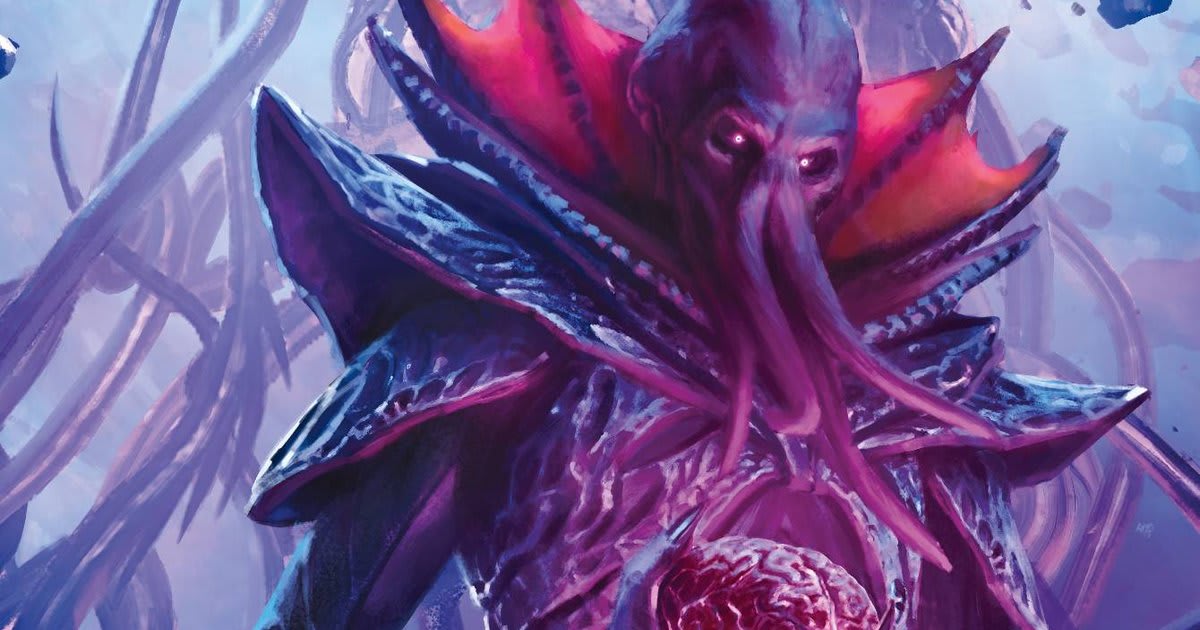
Art made by: Michael Broussard
That alignment between the inspiration and the final concept is obvious. Mind flayers do a lot, so the challenge is fitting their iconic abilities into balanced feats. The path includes psionic power, telepathy, Mind Blast, mind flaying, and the final change into an Aberration, but it gates those abilities behind decisions as the character evolves.
On a roleplaying and flavor level, this is awesome. Now the question is whether the mechanics live up to it.
From Tadpole to Transformation

Traditional ceremorphosis is parasitic. A tadpole consumes its host’s mind, takes over the body, and creates a new mind flayer that retains the host’s memories but has its own thoughts and motivations. That mind flayer would normally fall under the control of an elder brain.
This path works differently. The transformation happens gradually as you take its feats, and the UA encourages you to imagine how the character changes at every stage. Their skin might become a deeper violet. Their eyes might change color and shape. Tentacles eventually begin to grow around their mouth.
I really like that the document gives players inspiration for the physical transformation instead of leaving the feats as a purely mechanical progression. These are great roleplaying elements.
The Ceremorphosis Variables table also gives you reasons why the elder brain cannot simply take control. Maybe a deity protects you. Maybe an archdevil interferes, a specially warded helm shields your mind, or another elder brain is competing for influence. One option is even that your mind and personality are so awful that the elder brain does not want to interact with you, which is very funny.
The Elder Brain Control sidebar might be even more important. It asks the player and DM to agree on how the elder brain communicates, what it wants, what happens when the character resists, and whether it can ever force the character to act.
That conversation is essential. The relationship could become one of the best parts of the path, but nobody wants to unexpectedly lose control of their character. Establishing those boundaries first gives the DM room to make the transformation frightening without taking away the player’s agency.
How the Path of Ceremorphosis Works
The progression begins with Tadpole Host, available at level 4. Your next feat choice creates the first major branch: Illithid Thrallmaker, Tadpole’s Safeguard, or Ulitharid’s Might. At level 12, after taking at least two feats from the path, Full Ceremorphosis completes the transformation.
This branching structure is one of the coolest things about feat paths. You are not just collecting unrelated bonuses. Each feat moves the same story forward while letting you decide what kind of mind flayer your character is becoming. I liked this idea in the Paths of Villainy, I like it here, and I hope Wizards continues creating more paths—including ones that are not villainous at all.
Tadpole Host
Path of Ceremorphosis Feat (Prerequisite: Level 4+)
Tadpole Host begins the symbiotic relationship with the mind flayer tadpole in your body. It increases Intelligence by 1, teaches you the Mind Sliver cantrip, and gives you a pool of d6 Psionic Energy Dice equal to your Proficiency Bonus. Those dice return after a Long Rest and grow as you continue down the path.
Its final benefit, Psionic Overload, lets you spend one of those dice whenever you deal Psychic damage and add the result as extra Psychic damage.
My first reaction was that the Intelligence increase is too limiting. It obviously works for a Wizard or Artificer, but a Barbarian, Ranger, or many other characters may not want to spend a feat improving Intelligence. I understand why Intelligence fits a mind flayer path, but the entry feat should probably offer Constitution as another option. Constitution would represent the host physically surviving or resisting the transformation, and it would keep the path viable for many more characters.
The rest of the feat is fine, though a little underwhelming at first. Mind Sliver gives every character a way to deal Psychic damage, which means Psionic Overload always has something to enhance. The cantrip starts at 1d6 and scales with character level, but its best feature is making the target subtract 1d4 from its next saving throw before the end of your next turn. That can set up a much more important effect from you or an ally.
Adding a Psionic Energy Die gives the cantrip a decent burst of damage when you need it. You can spend those limited dice quickly or spread them across several turns. It is not spectacular by itself, but its value depends on what the later feats let those same dice do.
The First Transformation Choice
Each of the three middle feats upgrades your Psionic Energy Dice from d6s to d8s and grants 10-foot Telepathy. The real difference is what kind of mind flayer you are becoming: a manipulator, a protected host, or a physically powerful ulitharid.
Illithid Thrallmaker
Illithid Thrallmaker increases Intelligence or Charisma by 1 and always prepares Charm Person. You can cast the spell normally with a spell slot or spend a Psionic Energy Die instead. When you use the die, you also roll it and make one target subtract half the result, rounded up, from its saving throw.
I like this mechanic a lot. The dice are flexible resources rather than simple damage bonuses, and spending one makes the spell better instead of merely replacing a spell slot. It also helps a character whose Intelligence is not very high land the spell, which makes this branch more viable outside the most obvious Wizard build.
This is a good direction for the path. It is flavorful, useful, and gives the Psionic Energy Dice a clear identity.
Tadpole’s Safeguard
Tadpole’s Safeguard increases Constitution or Intelligence by 1 and always prepares the Shield spell. Once again, you can use a spell slot or spend a Psionic Energy Die to cast it. If spending the die causes the triggering attack to miss, you roll the die and deal that much Psychic damage back to the attacker.
This is so cool. A character without spell slots can now cast Shield several times per Long Rest, and the psychic backlash makes it feel like a mind flayer ability rather than a borrowed spell. I could see this being excellent on something like an Eldritch Knight, but almost any character would appreciate the defense.
It is another strong example of why I like the shared dice. The same resource can fuel damage through Tadpole Host or become a defensive reaction through this feat. That flexibility makes the whole path more interesting.
Ulitharid’s Might
Ulitharid’s Might is clearly intended as the martial branch. It increases Strength, Dexterity, or Constitution by 1 and grows two long tentacles around your mouth. You can make Unarmed Strikes with them, and their reach is 5 feet longer than normal.
I appreciate that they thought about martial characters here, and the flexible ability score increase is exactly what the opening feat needs. Unfortunately, the actual tentacle benefit seems really bad.
Why would a martial character replace a magic weapon or a stronger normal attack with a basic Unarmed Strike just to gain another 5 feet of reach? The tentacles do not add a Psionic Energy Die to the damage, create an extra attack, or provide another benefit that would make that trade worthwhile. The image is fantastic, but the mechanic does not deliver the fantasy.
I would rework it so the tentacles enhance the Attack action rather than compete with it. Perhaps once per turn you could make an additional tentacle strike after attacking, then spend and roll a Psionic Energy Die for extra Bludgeoning or Psychic damage. Even simply adding the die to a tentacle attack a limited number of times would give this branch a reason to exist.
The current version needs a lot of work, especially when the other choices provide improved spellcasting and one of the best defensive spells in the game.
Full Ceremorphosis

Path of Ceremorphosis Feat (Prerequisite: Level 12+, at least two Path of Ceremorphosis Feats)
At level 12, the transformation can become complete. Full Ceremorphosis increases Intelligence by 1, changes your creature type to Aberration, and upgrades your Psionic Energy Dice to d10s. The feat is repeatable, and taking it a second time for the other specialization is how the dice can reach d12s.
The Intelligence increase feels restrictive again. The middle feats acknowledge that different kinds of characters can walk this path, then the final feat pushes everybody back toward Intelligence. I think Intelligence or Constitution would be a much more consistent choice for both Tadpole Host and Full Ceremorphosis.
Changing into an Aberration is excellent. It makes the transformation mechanically real, not just cosmetic. The final decision then asks what kind of fully transformed mind flayer you have become.
Brain-Seeking Tentacles
Brain-Seeking Tentacles lets an Unarmed Strike made during your Attack action use both its Damage and Grapple options. You can also spend a Psionic Energy Die to deal extra Psychic damage equal to the roll plus your Intelligence modifier while reducing the target’s saving throw against the grapple. If that damage reduces the target to 0 Hit Points, the die is not spent. You can use the benefit once per turn.
This is better than Extended Tentacles, but it still does not feel strong enough. The martial character is still being asked to make an Unarmed Strike, and the payoff is competing against everything offered by the spellcasting specialization. Even the added damage depends on Intelligence after the martial branch allowed Strength, Dexterity, or Constitution.
The idea of grabbing a creature, flaying its mind, and metabolizing its brain is perfect. The mechanics need to be much more aggressive to fulfill that expectation. I would like the tentacles to work alongside weapon attacks, deal stronger damage, or grant a meaningful defensive benefit after consuming a creature. Right now the path’s physical side feels like an afterthought.
Mind Flayer Spells
Mind Flayer Spells always prepares Detect Thoughts, Levitate, and the new Mind Blast spell. Intelligence is the spellcasting ability, and you can cast them with appropriate spell slots or by spending Psionic Energy Dice.
This option is dramatically better.
Mind Blast is a level 6 Psion spell requiring only a Somatic component. As an action, it creates a 60-foot cone. Creatures in the area make an Intelligence saving throw, taking 6d8 Psychic damage and becoming Stunned until the start of your next turn on a failure. A successful save halves the damage and avoids the condition.
That is an iconic mind flayer ability, and being able to fuel it with the same Psionic Energy Dice you have carried through the entire path is powerful. Detect Thoughts and Levitate are also useful, flavorful additions. When I compare this package with Brain-Seeking Tentacles, the decision is not close. The spell option wins easily.
The Psion tag on Mind Blast is also interesting. It is another clear sign that Wizards still intends to move forward with the Psion as a spellcaster. With Dark Sun officially returning, it is difficult not to connect those dots. That is an inference, not a confirmation that this specific feat path belongs to Dark Sun, but the direction seems increasingly obvious.
My Overall Impression
From a roleplaying perspective, the Path of Ceremorphosis is top-notch. The gradual physical change, the struggle with the elder brain, and the choice to accept or resist becoming a mind flayer could support an entire character arc. This might be the most immediately playable story Wizards has attached to a feat path so far.
Mechanically, it needs another pass.
Tadpole Host and Full Ceremorphosis should probably increase Intelligence or Constitution so the path remains open to characters beyond dedicated Intelligence users. Illithid Thrallmaker and Tadpole’s Safeguard show how good the Psionic Energy Dice can be when they fuel flexible, thematic effects. Ulitharid’s Might and Brain-Seeking Tentacles need the same level of care.
The biggest problem is that the psionic spell route is so much better than the physical route. If Wizards wants the final decision to feel meaningful, becoming a brain-eating martial mind flayer needs a serious upgrade.
Even with those balance concerns, I really enjoy this path. The flavor is strong enough that I would probably try it in a campaign once it is finalized. It takes a transformation that many players already understand from Baldur’s Gate 3 and turns it into something a player and DM can explore together over many levels.
What do you think? Would you let the tadpole transform your character, and which branch would you choose?
Watch the UA Discussion
Subscribe to the newsletter
Never miss an article. Get the latest articles delivered straight to your inbox.
By subscribing, you agree to receive new article emails. You can unsubscribe at any time.Privacy Policy


