Publishing my Obsidian Vault Online
Table of Contents

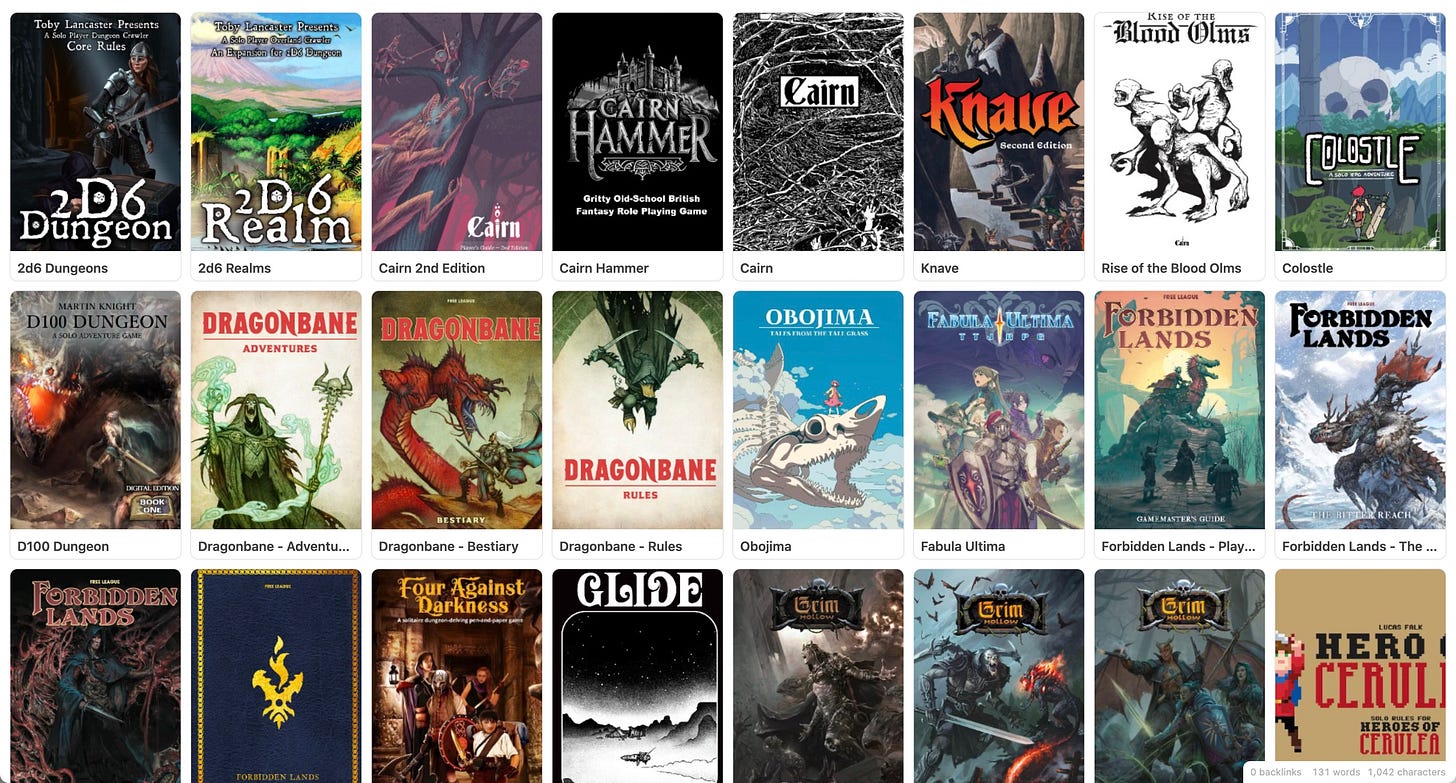
A while back, I wrote about how I use Obsidian as a digital library to catalog all my TTRPG books, both physical and digital.
If you are curious about the original system I use to manage my collection, you can explore the tool I built here: Games Library Tool.
What started as a simple catalog eventually turned into something much bigger.
Building the Library Inside Obsidian
Inside my vault, every game gets its own note with structured metadata such as:
- Cover art
- Whether I have read the book
- Whether I have played the game
- The last time I played
- Personal ratings
- Wishlist or backlog status
- The universe or system the game belongs to
Once this information is in place, filtering and browsing the collection becomes very easy.
For example, I can instantly view:
- All my Dungeons & Dragons books
- Everything related to Pathfinder
- My Old-School Essentials collection
- Or simply everything I own at a glance
This is one of the biggest strengths of Obsidian as a note-taking environment. It lets you turn simple notes into a structured knowledge system.
If you want to learn more about Obsidian itself, visit Obsidian Official Website.
Rewriting the D&D Rules in My Vault
At some point, I started rewriting the Dungeons & Dragons rules directly inside my vault. That may sound excessive, but it solved a real problem.
At the table, physical books are fantastic. I love owning them and flipping through pages, but during play they can slow things down.
For example:
- Someone might be using the Player’s Handbook for character creation
- I might need to check a spell description
- Another player might want to reference a monster ability
Now multiple books are being passed around the table. If you are also using expansion books or setting guides, it gets even more complicated.
Inside Obsidian, everything becomes:
- Instantly searchable
- Cross-referenced
- Interconnected through wiki links
A spell can link to conditions. Conditions can link to combat rules. Combat rules can link to actions.
The result is essentially a personal D&D wiki, and building it was honestly a lot of fun.
Why I Did Not Just Use D&D Beyond
There is already a digital platform for this: D&D Beyond. To be clear, I think D&D Beyond is a good product, but a few things personally bother me:
- You do not truly own the digital content you purchase
- You depend on their platform being online
- You cannot freely share books you purchased with friends
- If the site is in maintenance or has bugs, access can disappear
When I buy a physical RPG book, I own it. I can lend it, pass it around the table, and reference it anytime. So while I enjoy digital tools, I prefer systems where I retain control over my content.
Publishing My Vault
At some point, I wanted my players, especially online players, to access this interconnected rules reference.
The first obvious option was Obsidian Publish, which turns your vault into a hosted website. It is a great service, but it is also another subscription. Since I am trying to reduce how many subscriptions I maintain, I started exploring alternatives.
As a front-end developer, I already knew about static site generators that transform Markdown into websites. After exploring different approaches, I discovered Quartz, an open-source project that converts an Obsidian vault into a fully navigable website: Quartz.
Why Quartz Works So Well
Quartz preserves many of the things that make Obsidian powerful:
- Wiki links
- Backlinks
- Markdown structure
- Graph-like navigation
- Fast search
Because the output is a static website, it can be hosted almost anywhere.
My workflow now looks like this:
- Write and maintain notes inside Obsidian.
- Sync the notes into my Quartz project.
- Generate the static site.
- Deploy it automatically using Vercel.
The result is essentially a private Wikipedia for my campaign.
My players can search for:
- Spells
- Conditions
- Rules
- Lore
- Monsters
- Character options
Everything is interconnected through wiki links.
Why I Am Not Publishing My Full Vault (Publicly)
Even though the system works perfectly, I am not comfortable publishing the full version publicly. My vault contains rules and information that go beyond what is available in the official free rules. Even though I own the books, redistributing that content publicly raises copyright questions. Rather than navigating that grey area, I decided the safest option is to keep the full version private for my table.
The Next Experiment: A TTRPG Starter Vault
Instead of publishing a public rules wiki, I put together a TTRPG starter vault that anyone can download and use as a base for their own system.
The goal would be a public repository with a clean structure so people can start writing notes right away, whether they play D&D, Pathfinder, OSR games, or something else entirely.
I would include a few small opinionated defaults, such as:
- A practical folder structure
- A clean theme setup
- A lightweight plugin selection
- A consistent metadata pattern for notes
Nothing is locked in. Everything can be changed later as your own vault evolves.
If you want to explore it, the tool page has the overview, GitHub repo, and download link in one place.
Resources
Subscribe to the newsletter
Never miss an article. Get the latest articles delivered straight to your inbox.
By subscribing, you agree to receive new article emails. You can unsubscribe at any time.Privacy Policy