How to Run Published D&D Adventures Solo
Table of Contents

In part one, I explained why solo D&D has become an important part of the hobby for me. In part two, I covered party size, encounter balancing, story mode, and the rules I use when a character dies.
Now it is time to open the adventure.
Running a published Dungeons & Dragons campaign alone creates an obvious problem: I am both the Dungeon Master and the players. I read the secrets, control the monsters, know where traps are hidden, and see information the player characters would normally have to discover.
When I started playing solo, I tried to solve that problem with more systems. I collected solo GM guides, oracles, random tables, and books full of prompts. Before long, I had so many resources around me that playing the game became secondary to looking up how I was supposed to play it.
My current method is much simpler. I accept that I know more than my characters, make decisions using the information in front of me, and add small procedures only where they create a meaningful outcome.
Why I Stopped Using So Many Solo Tools
Oracles and random tables can be excellent tools. They answer uncertain questions, introduce events I did not invent, and help create a world without a separate GM.
They were not working for the kind of sessions I usually play.
If I had an entire afternoon available, I could take my time asking questions, interpreting results, rolling on several tables, and building scenes around the answers. Most of my sessions are closer to one or two hours. Every time I stopped to find another book, locate the right table, and interpret a result, the adventure lost momentum.
Eventually, I felt as though I was referencing tools instead of playing D&D.
So I removed almost all of them.
Published adventures already provide the locations, NPCs, encounters, motivations, and possible outcomes I need. My priority is to experience that material and move the story forward. I now read the adventure a section at a time and play along with what is written.
That decision does not make oracles unnecessary for everyone. It reflects my available time and the experience I want. If detailed emergent storytelling is the part you enjoy most, a larger solo toolkit may be perfect for you. My preference is a faster and more direct journey through the book.
I Embrace Metagame Knowledge
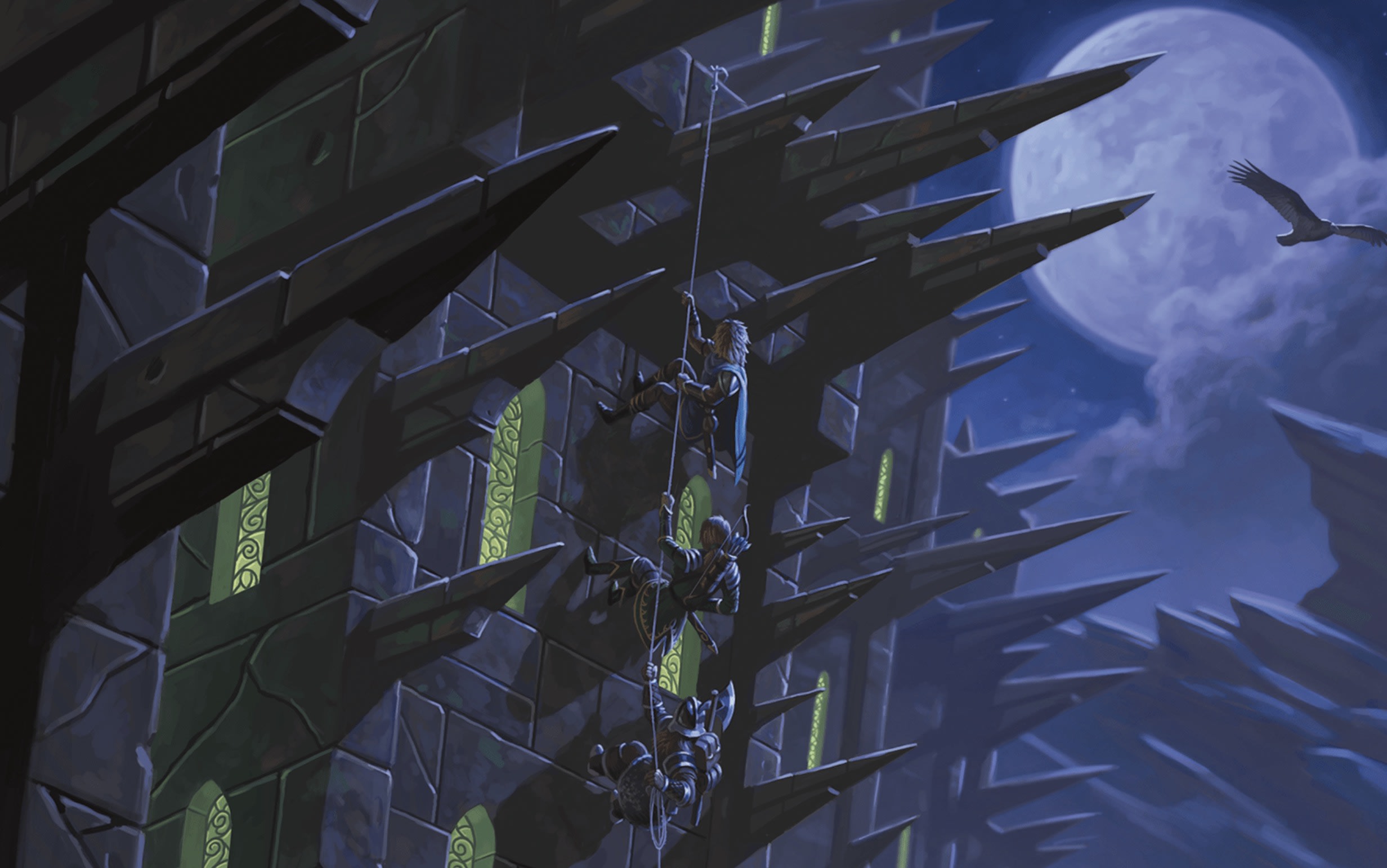
Metagame knowledge is any information I know because I read the adventure or stat block but that my characters may not know.
Examples appear constantly:
- I know an NPC is secretly working for the villain.
- I know a monster resists fire damage.
- I know the next room contains a trap.
- I know where the secret door is located.
- I know the enemy’s Armor Class, hit points, and weakest saving throw.
My first instinct was to fight this information. I would stop and debate with myself: would this character know about the resistance? Does their backstory justify it? Am I making them search because I saw the secret door in the text? Am I cheating if I choose a spell that targets the monster’s weak ability score?
Those internal arguments were slow and inconsistent. Sometimes I decided a character knew something. In a similar situation later, I decided they did not. I was spending energy pretending I had not read words that were still on the page in front of me.
Now I embrace the information and use the same standard for both sides.
Running Combat With Open Information
During combat, I keep the monster stat blocks open. I know their Armor Class, hit points, attacks, resistances, immunities, and ability scores.
My characters make effective decisions using that information.
If a monster has very little health remaining, they may focus on it and remove an enemy from the battlefield. If it has a low Dexterity saving throw, a spell that targets Dexterity becomes attractive. If it resists fire, the Wizard chooses something else. If its Armor Class is low, a weapon attack may be the safest option.
Then I give the monsters the same advantage.
If a Tiefling resists fire damage, an intelligent enemy avoids wasting its best fire attack on that character. If the Paladin has an Armor Class of 21, the monster may target someone easier to hit. If the Wizard is concentrating on a powerful spell, enemies who understand magic may try to break that concentration.
Both sides attempt to make good decisions with the available game information.
This changes the feeling of combat. It becomes a little closer to a tactical board game than a performance where I pretend to surprise myself. That is completely fine with me. The roleplaying part of my campaign still happens through character decisions, journaling, conversations, and the way the party responds to consequences.
Open information also makes encounters shorter. Characters and monsters waste fewer turns on ineffective choices. Everyone applies their abilities with purpose, which helps offset the extra time required for one person to control the entire battlefield.
What About Monster Intelligence?
Common sense still matters.
An experienced spellcaster should make more sophisticated decisions than a hungry beast. A mindless creature may attack the nearest target even when someone else would be easier to defeat. A cowardly enemy may flee. A disciplined guard may protect an objective instead of chasing the weakest character across the map.
I do not need a complicated oracle to decide any of that. The creature’s description, ability scores, and current situation usually provide enough direction.
Embracing metagame knowledge does not mean every monster becomes an identical tactical genius. It means I stop concealing numerical information from myself and use the fiction to decide how intelligently each creature responds.
Handling Story Secrets
Combat information is easy to share between both sides. Story secrets require a little more judgment.
If the first chapter tells me that a friendly NPC is secretly the main villain, I know my characters should not confront that person immediately. The adventure is clearly building toward a later reveal. Unless the characters discover evidence or the story presents a reason for suspicion, they continue treating the NPC as the person they appear to be.
I do not need to roll every time I learn a secret. Often, the structure of the adventure makes the boundary obvious.
The important distinction is between information and a prompt to act. Reading a hidden paragraph gives me information as the person running the book. An overheard conversation, discovered letter, contradictory statement, or suspicious action gives the characters a reason to investigate.
Once the story provides that prompt, I use the normal skills and rules. Before it does, I allow the secret to remain part of the adventure.
My Alternating Rule for Traps
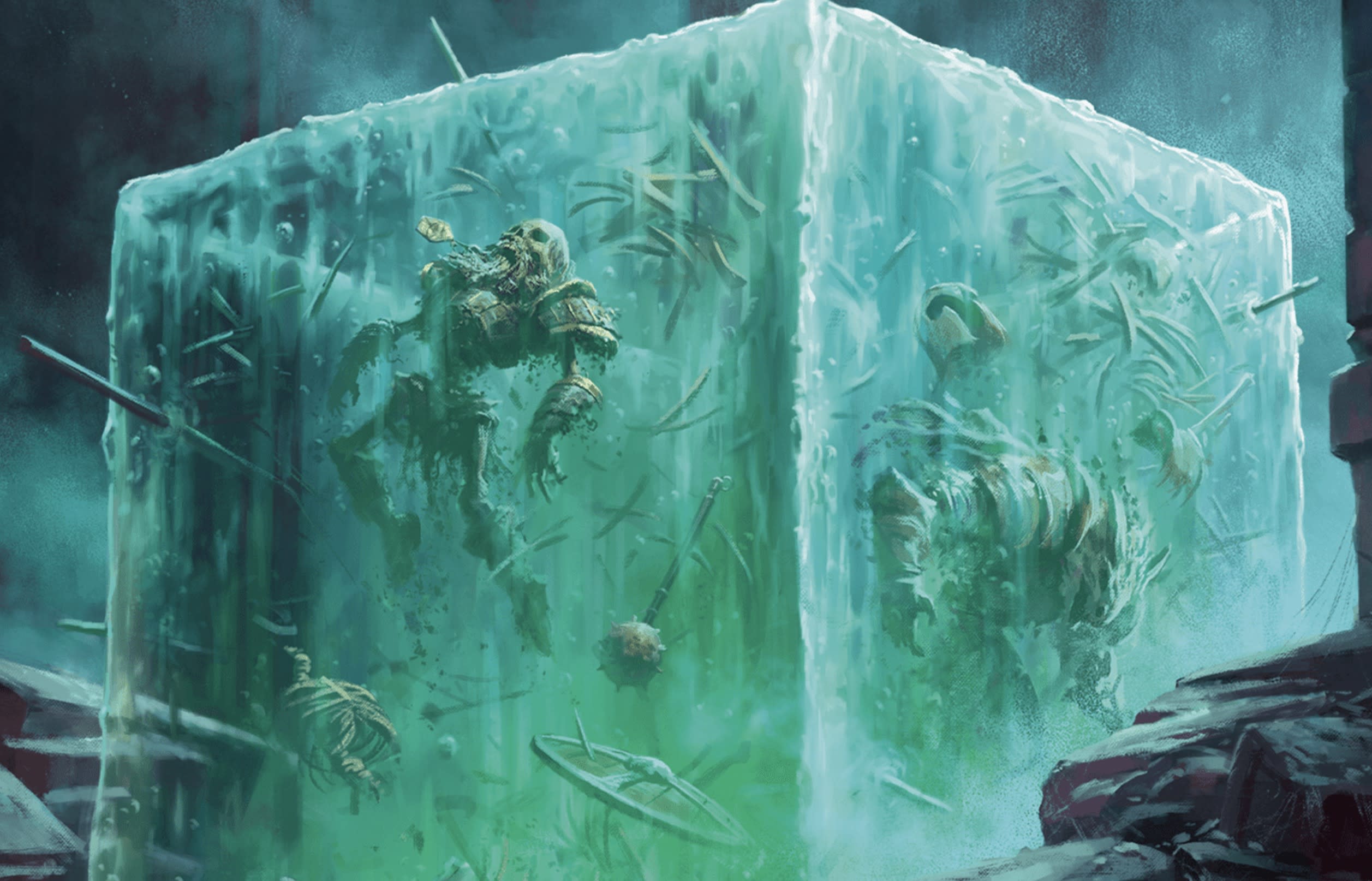
Traps are more awkward because seeing the trap description immediately reminds me that a careful adventurer might search for it.
I use a deliberately simple procedure: I alternate.
For the first trap, the party triggers it. I make the required saving throw or resolve the attack, damage, and other consequences exactly as the adventure describes.
For the next trap, I allow the party to search before triggering it. They make the appropriate Perception or Investigation check. If they discover it, they can attempt to avoid or disarm it. If they fail, the trap still activates.
The third trap triggers automatically. The fourth can be searched for, and so on.
This is not a realistic simulation of how adventurers behave. It is a fast and impartial compromise. I do not have to argue with myself about whether the characters would suddenly become cautious in this particular hallway, and knowing a trap exists does not guarantee that they avoid it.
If the fiction makes the answer obvious, fiction wins. A warning carved into the wall, an NPC specifically describing the trap, or a character announcing that they are moving slowly through a trapped tomb can justify a search regardless of the sequence. The alternating rule handles ordinary cases where nothing else points strongly in either direction.
Secret Doors Still Require a Check
Knowing that a secret door exists does not mean the characters find it.
If they search the room, I roll the relevant Perception or Investigation check against the adventure’s difficulty. On a success, they discover the door. On a failure, it remains hidden.
The decision to search has a cost: time.
My default is that a thorough search takes about five minutes in the game world. That matters when an effect has a limited duration, enemies may be moving nearby, or the party is under pressure.
Imagine that a Barbarian’s Rage or another temporary benefit is still active after combat. The next encounter might be nearby, but the room also contains a secret door. Searching could reveal treasure or a shortcut, but the active effect will expire. I know the door is there, yet I still have a meaningful decision to make.
Time turns metagame knowledge into a choice instead of a free reward.
When no pressure exists, I let the party search if that is what I want them to do. The roll still determines whether they notice the hidden feature. I am not interested in pretending that the thought of searching never occurred to them simply because it originated in my side of the brain that read the adventure.
Social Encounters and Negotiation
Social scenes are where I do most of my traditional roleplaying.
I think about the characters’ personalities, goals, and relationships. I decide what they say to an NPC and how the NPC responds based on the information in the adventure. When the outcome is uncertain, I call for an ability check.
Negotiating a price is a useful example. If a character asks a merchant for a discount, I establish a DC and decide what success provides, perhaps 10 or 20 percent off.
Failure needs a consequence. Otherwise I would attempt the check in every shop because the possible outcomes would be a discount or the original price. There would be no reason not to roll.
My rule is that a failed negotiation increases the price by twice the discount I tried to receive. If success would provide 10 percent off, failure makes the item cost 20 percent more.
Now the decision has weight. Is the character persuasive enough to take the risk? Is the item important enough to pay the increased price after failure? Should the party accept the listed cost and save the negotiation for something more valuable?
I apply the same principle beyond shops. A quest giver might offer a larger reward on a success but reduce the payment after a failed demand. An NPC might reveal more information on a success but become suspicious after a failure. The specific consequence changes, but the roll should not be a free attempt at improving the situation.
Reading the Adventure One Section at a Time
Once these procedures are in place, the actual process is straightforward.
I read a page or section. If it describes a location, I imagine the scene. If an NPC begins a conversation, I decide how my characters respond. If the book presents a quest, I consider whether they would accept it. If an encounter begins, I place the creatures, open the stat blocks, and run both sides.
Then I continue reading.
I do not attempt to randomize every paragraph or generate an alternative to every written event. The published adventure is the reason I am playing. I want to experience its locations, villains, and story.
This approach makes the book feel alive without requiring me to rebuild it. The author provides the structure, while my characters and the dice determine what happens inside that structure.
Published Adventures I Recommend for Solo Play
Lighter adventures are easier when you are learning to run both sides of the game. Starter adventures explain their structure clearly, begin at low levels, and introduce abilities gradually.
These are some of the books and resources I would consider:
Dragon of Icespire Peak
Dragon of Icespire Peak remains my favorite starting recommendation. Its quest board structure gives the party choices without requiring me to manage an enormous branching campaign. It was also the adventure I used for my first solo D&D experience.
Lost Mine of Phandelver and The Shattered Obelisk
Lost Mine of Phandelver is another approachable introduction. The first four chapters of Phandelver and Below: The Shattered Obelisk revisit that original adventure before the new story continues in Chapter 5.
That gives a solo player the option to begin with the familiar introductory campaign and decide later whether to continue into the stranger and more dangerous material below Phandalin.
Dragons of Stormwreck Isle
The Dragons of Stormwreck Isle Starter Set is written for characters from levels 1–3. Its limited level range and presentation for new players make it less intimidating than beginning with a campaign designed to last a year.
Dragon Delves and Other Anthologies
Anthologies are particularly useful because I can choose an adventure appropriate for the level or character build I want to test. I do not need to complete twelve connected chapters before reaching material for higher levels.
Dragon Delves contains ten adventures centered on dragons for levels 1–12. Three chapters include support for one player with a separate DM. That is duet play rather than the GMless method described in this series, but the modular adventures and guidance can still make the book useful for solo adaptation.
Other anthologies can work for the same reason: pick an adventure, create an appropriate party, and treat it as a standalone solo session. If I enjoy it, I can find a narrative thread connecting it to the next one. If I do not want a continuous campaign, the same characters do not even have to return.
Adventures Designed Specifically for One Character
When I want a single character and no encounter conversion, I turn to products written for that purpose. My review of The Wolves of Langston explains how its interactive structure works. Obvious Mimic also publishes The Crystals of Z’leth, The Secret of Oki Island, The Mystery of Witchhaven, and other solo 5E adventures.
These books provide a different experience from running a conventional campaign by myself, but they are an easy way to begin playing alone.
Community Adventures and Other Publishers
Official D&D books are only one source of material. The Dungeon Masters Guild contains adventures and supplements created by the community using approved D&D material.
Other publishers offer larger alternatives as well. Ghostfire Gaming’s Dungeons of Drakkenheim is a Fifth Edition campaign set in a dark fantasy world. Paizo’s Abomination Vaults, originally a Pathfinder campaign, has been adapted to Fifth Edition and is available on D&D Beyond. Kobold Press publishes Tales of the Valiant, an independent game built from the familiar foundations of 5E with its own rules and adventures.
These books may require more conversion or judgment than a starter adventure, but solo play gives me permission to use whichever material interests me.
My Method Is Intentionally Simple
There is no single correct way to play D&D solo.
Some players want detailed oracles, emergent plots, and procedures that conceal as much information as possible. Others want to journal from a character’s perspective. Some use virtual tabletops, AI tools, random dungeon generators, or heavily modified rules.
My current method prioritizes momentum:
- Choose two to four characters based on the time available.
- Decide whether I am using story mode or allowing normal character death.
- Read the published adventure one section at a time.
- Keep combat information open and let both sides make effective decisions.
- Preserve obvious story secrets until the characters receive a reason to investigate.
- Alternate between triggering traps and allowing a search.
- Require a check and a time cost for secret doors.
- Give social checks meaningful consequences for both success and failure.
Those rules are enough for me to stop debating with myself and start playing.
The best solo procedure is not the one with the most realistic simulation or the largest collection of tables. It is the one that gets the books open, the dice moving, and the characters into the adventure.
Subscribe to the newsletter
Never miss an article. Get the latest articles delivered straight to your inbox.
By subscribing, you agree to receive new article emails. You can unsubscribe at any time.Privacy Policy


