World of Warcraft Fits D&D. I'm More Worried About What Comes Next
Table of Contents

One of the announcements from Gen Con that caught my attention was the upcoming D&D: World of Warcraft book. The official D&D: World of Warcraft Collector’s Edition Ultimate Bundle is currently available for preorder, which gives us a clearer look at what the release is supposed to include.
It feels like D&D is moving toward something similar to Magic: The Gathering’s Universes Beyond approach, which brings other franchises into the game. I want to be clear right away: I think World of Warcraft is a great fit for D&D. In fact, I think this idea makes more sense for D&D than it does for Magic.
My main concern is not this book. My concern is what happens if these releases become more frequent than the D&D settings and worlds that already exist.
This is a follow-up to my Gen Con keynote recap, where I covered the announcement alongside the other news from the presentation. Here, I want to spend more time thinking about why this crossover works for me and where I think the risks are.

What Universes Beyond Does in Magic
Universes Beyond was created to bring other franchises and intellectual properties into Magic: The Gathering. The idea is pretty simple: take a well-loved property with an existing audience and bring it into a game that already has a strong player base.
And honestly, the idea is good. You can bring fans of Doctor Who, The Lord of the Rings, Final Fantasy, Marvel, Avatar: The Last Airbender, or Teenage Mutant Ninja Turtles into a game like Magic. Those properties already have passionate audiences, and Magic is a very strong vehicle for introducing them to a new game.
The core structure of Magic does not change that much when a new set comes out. You still have 20 life points. You still need to reduce your opponent’s life total to zero, empty their deck, or win through another card effect. You still have abilities like haste, first strike, and trample. New sets add new mechanics, but that has always been part of Magic.
The part that changes is the storytelling and visual cohesion.
Before Universes Beyond became such a large part of Magic, a set usually belonged to a specific world or plane. You might have a story set in Innistrad, followed by another Innistrad set that continued or completed that story. The art, characters, and setting all shared a common language.
That was one of the things I liked about Magic. Even when the game moved between sets quickly, there was still a sense that everything belonged to the same larger universe.
Now, you can build a deck that includes cards from Magic’s own settings alongside Spider-Man, Avatar, Final Fantasy, and Teenage Mutant Ninja Turtles. Mechanically, that does not necessarily create a problem. But in terms of art, tone, and story, it can become difficult to understand what this deck is supposed to represent.
That is where I think some of the frustration with Universes Beyond comes from. It is not only that the outside properties exist. It is that they can make the world of Magic feel less cohesive, especially in a format like Standard, where players need to keep acquiring cards from the newest sets as older cards rotate out.
This is much less of an issue if you play a sealed format or draft. If you open a box from one specific universe and build a deck from that set, the experience can still feel very coherent. The problem is more visible when all of these different properties enter the same competitive environment.
I understand why some Magic players are unhappy with the direction. At the same time, I am not angry that Universes Beyond exists. Bringing new players into a hobby is a good thing. You do not want to rely only on the same people who have been playing for twenty years. When those players eventually leave, you need new people to keep the game alive.
For me, the ideal solution would be to have an official format where Universes Beyond sets could exist together, while Magic’s own settings remained more protected in another format. That might not be practical, and it could create its own problems if one format became much more popular than the other. Still, I understand why some players would want that separation.
Why World of Warcraft Fits D&D So Well
World of Warcraft feels unusually compatible with D&D’s existing fantasy-adventure framework.
Both games are built around dungeons, dangerous creatures, powerful bosses, character classes, magic, factions, and long-running adventures. World of Warcraft has warriors, rangers, warlocks, druids, shamans, paladins, and dragons. D&D already speaks that same fantasy language.
If D&D had created World of Warcraft as one of its own settings, I do not think anyone would find the concept strange. It would fit alongside settings like Dragonlance, Dark Sun, or Ravenloft, even if the tone and details were different.
That is why this crossover feels more natural to me than some of the other properties that could be brought into D&D. World of Warcraft is already about creating a character, exploring a dangerous world, entering dungeons, fighting monsters, and eventually facing powerful enemies at the end of an adventure.

The main difference is that we are seeing a third-party-style setting arrive through the company that owns D&D rather than through an outside publisher. That might be what feels strange to some people. But the actual content is not a weird fit at all.
D&D Is Not a Competitive Game
The reason I think this idea works better in D&D than in Magic is that D&D is not a competitive game.
D&D is cooperative. Even when the Dungeon Master is controlling the monsters and the players are trying to defeat them, the real game is about creating and leading a story together. The DM and the players are working toward an experience, not trying to prove that one side has built a more powerful deck.
There is still competition inside the fiction. You want to play well, create a strong character, survive the adventure, and defeat the villain. But you are not required to buy the newest D&D book to remain competitive with everyone else at the table.
If you do not want to use the World of Warcraft material, you can simply ignore it. It will not rotate out another book from your campaign. It will not make your existing character options illegal. It is just another source of ideas that your group can accept, change, or leave on the shelf.
Even if a player wants to bring a World of Warcraft character option into a regular campaign, the group can talk about it. If the DM and the other players agree, you can play a death knight, demon hunter, or another option from the book and explain that character through whatever setting you are already using.
The flavor is free. You can take a mechanical idea and describe it as something from the Forgotten Realms, Eberron, Dragonlance, or your own homebrew world if it works for your table.
That flexibility is a big difference from competitive card games. In D&D, crossover material is primarily a shared fiction. It does not have to redefine every other campaign around it.
What Is Included in the Current World of Warcraft Preorder?
The official D&D: World of Warcraft Collector’s Edition Ultimate Bundle is currently available for preorder at $144.99.
The official D&D Beyond overview says that the book is scheduled to release on November 17, 2026, with Master Tier early access beginning on November 3.
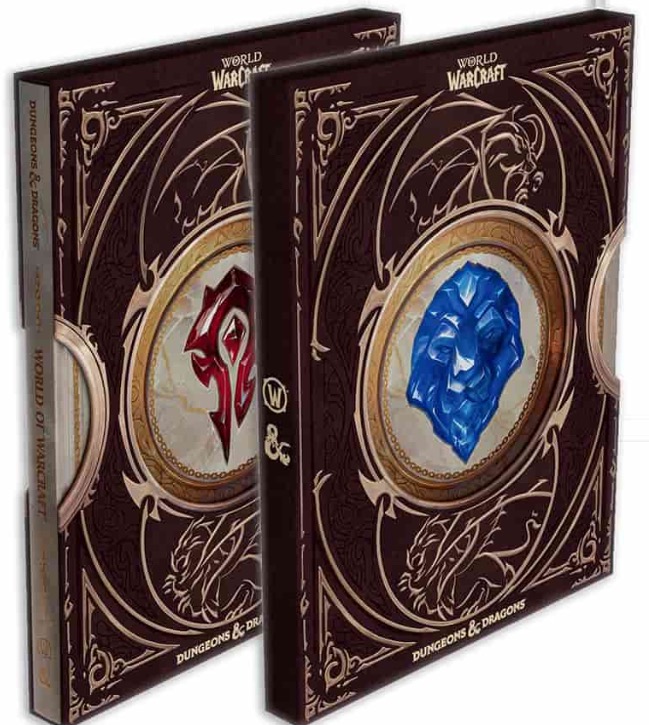
The bundle includes the physical Collector’s Edition, the digital gameplay expansion, an Icecrown Citadel Adventure Map Pack, and a physical Dungeon Master’s Screen. The page also lists preorder bonuses such as digital dice, Horde and Alliance character-sheet backgrounds and frames, a Murloc promo mini, the D&D Encounters: Season of Champions mini-adventure, and World of Warcraft in-game items.
The gameplay expansion is supposed to include:
- Rules for all 13 World of Warcraft classes
- 9 new or revised subclasses
- More than 40 specializations
- 16 species
- More than 60 spells
- More than 50 monsters
- 30 dungeon boss stat blocks
- 7 iconic dungeons
- A collection of World of Warcraft factions
The six new subclasses listed on the product page are:
- Oath of the Ebon Blade for the paladin
- Oath of the Holy for the paladin
- Demon Hunter for the ranger
- Shadow Domain for the cleric
- Discipline Domain for the cleric
- Path of the Elements for the barbarian
The three revised subclasses are Swashbuckler for the rogue, Path of the Spiritual Guardian for the barbarian, and Warrior of Mystic Brews for the monk.
I like this lineup. The barbarian getting two options is especially welcome because the class has been waiting a while for more subclass support. The monk also gets another option here, and the Demon Hunter is one of the World of Warcraft concepts I am most interested in seeing translated into D&D.
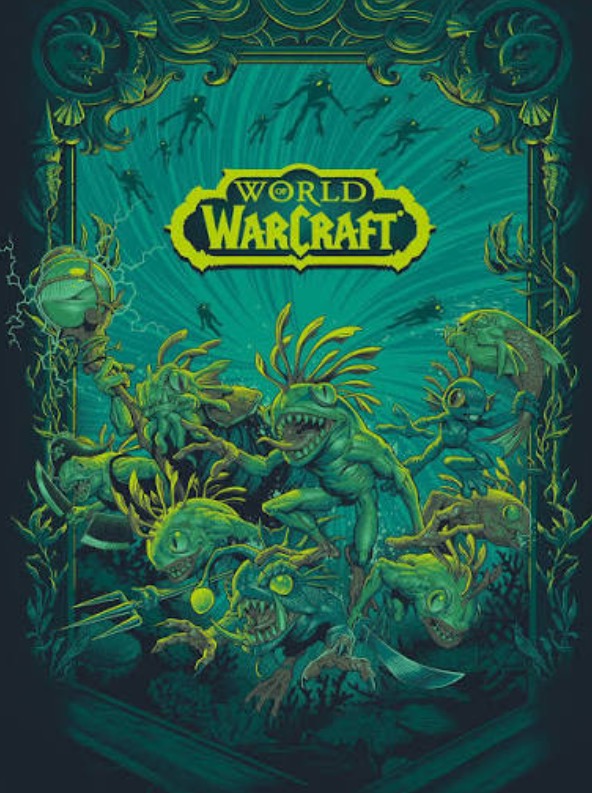
The product page currently gives slightly different numbers for the magic items and factions in two parts of the listing. One section mentions 25 or more magic items and 23 factions, while another mentions 30 or more magic items and 25 factions. I would rather wait for the final details than pretend those numbers are settled.
The map pack also looks useful. It includes physical maps for Icecrown Citadel, tokens, and a digital adventure built around the location. The Dungeon Master’s Screen has World of Warcraft artwork and reference information for things like faction renown and combat.
One detail worth knowing before preordering is that the digital adventure is provided as a code inside the physical product. Buying the Collector’s Edition Ultimate Bundle does not provide immediate access to the digital adventure. The World of Warcraft in-game items also require a Battle.net account, an active subscription, and a World of Warcraft license.
The Part That Makes Me Hesitate
My hesitation is not about World of Warcraft itself. I played Warcraft when I was younger. I played Warcraft I, Warcraft II, and Warcraft III, and I also spent time with StarCraft and Diablo. I have a lot of affection for those older Blizzard franchises.
I would honestly love to see a Diablo version of this idea in the future. A D&D book built around dark dungeons, loot, demons, and a desperate fight against overwhelming evil could be incredible.
So I am not against the concept. I am excited about it.
The thing that could turn this into bad news is if crossover books become more frequent than D&D’s own books and settings. If we reach a point where D&D releases six books in a year and five of them are licensed settings, I think players will start to feel that the game is becoming diluted.
D&D already has its own art, lore, settings, and history. That is part of why many people love the game. A World of Warcraft book can add something interesting without replacing that identity. But if the original settings become an afterthought while outside franchises receive most of the attention, I understand why players would become annoyed.
If these releases stay limited to one or two crossover books a year, while the majority of the schedule continues to build D&D’s own worlds, that balance could work very well for me.
Final Thoughts
The short version is that I think World of Warcraft is a great fit for D&D.
It has the classes, monsters, dungeons, factions, bosses, and fantasy identity that make a D&D adaptation feel natural. More importantly, D&D’s cooperative structure means that this material can simply be another setting or toolbox for your table. If you do not want it, you do not have to use it. If you are a fan, you can bring those characters and ideas into your campaign with the group’s permission.
That is a much more comfortable way for me to approach licensed crossover material in D&D than the way crossover cards can affect a competitive Magic environment.
I am excited to see the World of Warcraft book in more detail. I want to see how the classes feel, how the monsters are designed, what the dungeon bosses look like, and how much useful faction material is included. I am also curious to see whether the profession system becomes a meaningful way to customize characters between quests or simply another optional layer.
For now, though, I am cautiously optimistic. World of Warcraft feels like a natural addition to D&D. I just hope Wizards remembers that D&D’s own worlds should remain at the center of the game.
Resources
- Everything You Need to Know About D&D: World of Warcraft
- D&D: World of Warcraft Collector’s Edition Ultimate Bundle on D&D Beyond
Cheers!
Subscribe to the newsletter
Never miss an article. Get the latest articles delivered straight to your inbox.
By subscribing, you agree to receive new article emails. You can unsubscribe at any time.Privacy Policy


