Daggerheart: Hope & Fear First Impressions
Table of Contents
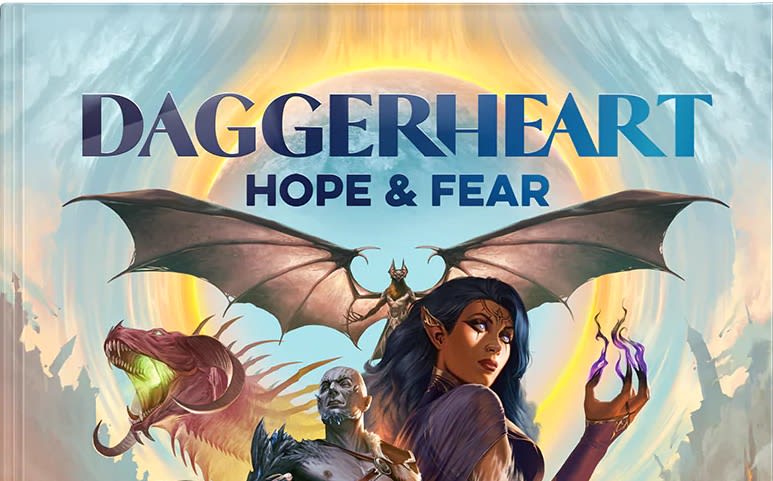
I received Daggerheart: Hope & Fear on July 22, and I have been excited to finally take a closer look at it. This is a first impression rather than a full review: I have not played through the expansion yet, so I am not going to pretend I can already tell you how every class, adversary, environment, or transformation option works at the table. For now, I am focusing on the physical product, what it includes, and why it makes me want to spend more time with Daggerheart in general.
I also realized something while writing this: I have never actually written an article about Daggerheart. That feels strange, because I think it is a wonderful game that deserves to be known beyond the Critical Role audience. After this first look at the expansion, I would like to write a small series about the core game, its rules, and how it might work for solo play.
What is Daggerheart?
For anyone who is not familiar with it, Daggerheart is a fantasy tabletop role-playing game created by Darrington Press and Critical Role.
Critical Role began with a group of friends playing Dungeons & Dragons together and sharing those games online. Since then, it has grown into a much larger storytelling company, with several actual-play campaigns, animated shows, and other projects. I have not watched much Critical Role myself, but I know how important it has become to many people in the tabletop RPG community.
Daggerheart is Critical Role’s own tabletop RPG system. The game keeps some familiar fantasy RPG ideas, but it is especially interested in character-driven stories, shared worldbuilding, and mechanics that give the narrative somewhere to go after every roll.
The official game description focuses on two things that immediately stand out: its card-based character options and its Hope and Fear resolution system. The Canadian Critical Role store lists the core set as a 366-page hardcover with 279 illustrated cards and a PDF of the rulebook. It has an impressive physical presentation, with cards for abilities, spells, ancestries, communities, and other character options.
That card approach is not just a visual gimmick. If you are playing a character with several abilities, having the relevant cards in front of you can be much easier than constantly searching through a character sheet or rulebook. It also gives the game a tactile quality that I really appreciate in a physical RPG.

Hope and Fear are at the heart of the game
The name of this expansion is Hope & Fear, which feels very appropriate because those are also the two forces at the centre of Daggerheart’s core resolution system.
When you make an action roll, you roll two twelve-sided dice: one Hope die and one Fear die. You add the two results together to determine whether the action succeeds, but the higher individual die also determines whether the result happens with Hope or with Fear.
That creates an interesting outcome. An action can succeed with Hope or with Fear. It may work either way, but the tone and consequences can be different. A Hope result gives the players Hope to spend on future abilities. A Fear result gives the game master Fear, which can be used to challenge the characters and complicate the story.
I really like the idea of giving both the players and the game master resources through the same roll. It means a roll does more than answer the question, “Did that hit?” It also changes who has more narrative fuel to work with next.
There are other mechanics in Daggerheart that follow the same design philosophy. For example, when a character is about to die, they can take a Last Stand and use that moment to do something significant. There are also character options that reward you for leaning into something your character is especially known for.
Those details are important to me because they show what Daggerheart is trying to do. The game is not only looking for ways to resolve actions quickly. It is also trying to turn rules moments into opportunities for roleplay.
The physical presentation is excellent
One of the first things I noticed about Daggerheart was the production quality. The illustrations are beautiful, colourful, and full of energy. The art direction feels close enough to modern Dungeons & Dragons that it will probably be approachable to people coming from that game, while still giving Daggerheart its own identity.
That matters more to me than it might seem. The artwork in the original Monster Manual was one of the things that first pulled me toward Dungeons & Dragons, and I still think strong visual design can make a rulebook much easier to engage with. Daggerheart clearly puts a lot of care into making its books feel like objects you want to spend time with.
The cards are another strong part of the presentation. In the core set, they give players a practical reference for abilities, spells, and other character options. I can imagine a small problem if several players need the same card at the same time, but that is less likely to matter when everyone is playing a different character with their own set of options.
For a new player, having an illustrated card in front of them may be much less intimidating than being told to search through a large rulebook for the description of an ability. That kind of accessibility is valuable, especially for a game that wants to support people who are new to tabletop RPGs.

What is included in Hope & Fear?
- The new Dread domain
- Four new classes: the Assassin, Brawler, Warlock, and Witch
- Two subclasses for each of those classes
- Six new ancestries
- Six new communities
- More than 100 equipment and loot options
- Transformation cards for becoming a vampire, werewolf, reanimated character, shapeshifter, ghost, demigod, and more
- More than 130 new adversaries
- 28 environments
- Four campaign frames
- Two rip pads of blank adversary sheets

That is a lot of material for one expansion. I am especially interested in the transformation rules. Being able to build a character around something as dramatic as becoming a vampire, ghost, or demigod could create a very different kind of campaign structure, and I want to see how the rules handle that change without making the character feel disconnected from the rest of the group.
The new classes also immediately give me a few obvious characters I would like to try. The Assassin, Brawler, Warlock, and Witch all have strong identities before I even get into their mechanics, and the artwork for them looks fantastic.
The box also includes the cards needed for the new options and the blank adversary sheets listed above. The rip pads are not the most exciting part of the package, and they do feel a little thin compared with the rest of the product, but they are still useful to have. They feel more like a small bonus than a major feature of the expansion.
The value looks very good
The standard physical edition cost me around $55–56 CAD, which matches the current price on the Canadian Critical Role store. The core set is listed at $75 CAD, and Daggerheart does not split its core rules between a Player’s Handbook, Dungeon Master’s Guide, and Monster Manual.
The core rules come in one main purchase, and the expansion follows the same basic philosophy: one book, cards, and a large amount of additional material. If you are usually the person at the table who buys all the books, that makes a meaningful difference.
I also think the production quality makes the price feel reasonable. This is a substantial book with excellent art, and the card system adds something physical that you do not get from a standard rulebook. I have bought smaller and less lavish RPG books for more money, especially after shipping, so the standard edition feels like good value to me from this first impression.
I want to be clear that this is only an early value judgment. I have not played the expansion yet, and the usefulness of all those new options will depend on how easy they are to use during an actual campaign.
The deluxe edition looks beautiful, but it is expensive
There is also a deluxe edition of Hope & Fear. According to the deluxe product listing, it includes the standard edition’s contents along with a gold-foil storage box, alternate artwork, a game master screen, Fear tokens, additional rip pads, and deluxe dice. The deluxe version looks genuinely beautiful, and I understand why it would appeal to someone who wants a premium physical set for their table.
The problem is the price. In Canadian dollars, the standard edition is around $56, while the deluxe edition is listed at $168.50. That is more than twice the price, and for me, that makes it much harder to recommend as the better value.
If you have the budget and really enjoy deluxe RPG products, I can see the appeal. The box, the alternate artwork, and the dice all look great. But the standard edition seems like the sensible option if your main goal is to get the rules and play the game rather than collect the most elaborate version of the product.
Why I want to explore Daggerheart for solo play
This is the part that interests me the most.
I do not want to claim that Daggerheart is automatically a solo RPG, or that I already know how well this expansion works without a game master. I still need to read the rules more carefully and test things myself. But the core ideas already make me curious about solo play.
The Hope and Fear dice could create a useful source of uncertainty. In a solo game, it is easy to make every decision too deliberately because you are choosing what happens for both sides of the table. A system that gives you a successful result but also tells you whether Hope or Fear is driving the scene could help create complications without requiring me to invent every consequence from scratch.
The adversaries and environments also make me curious. If the adversary rules give enough guidance about how an adversary behaves, the game could be easier to run solo than a system that expects the game master to improvise every enemy decision. I need to test that, though. At this stage, it is a design possibility rather than a conclusion.
I am also interested in how the campaign frames could support a solo structure. A strong premise, a defined environment, and a clear set of character options can go a long way when I am trying to start a solo campaign without spending weeks preparing it.


What I want to explore next
This first impression has made me realize that Daggerheart probably deserves more than one article here.
Before doing a full review of Hope & Fear, I would like to start with the core rules and explain the game properly. I want to look more closely at character creation, the card system, Hope and Fear, combat, adversaries, and the mechanics that encourage roleplay.
After that, I would like to return to the expansion and go through the new classes, subclasses, ancestries, communities, adversaries, environments, and transformation rules in more detail. I also want to test whether the game can support the kind of solo play I enjoy instead of simply assuming that the narrative mechanics will work without adaptation.
So this is the beginning of a small Daggerheart series, not the final verdict on the expansion.
Resources
- Daggerheart official website
- Daggerheart getting started resources
- Darrington Press: Daggerheart: Hope & Fear Unveiled
- Daggerheart Core Set at the Critical Role Canada store
- Daggerheart: Hope & Fear standard edition
- Daggerheart: Hope & Fear deluxe edition
- Critical Role
If you are not familiar with actual-play shows, here are a few other channels worth exploring. They are not all Daggerheart shows, but they are part of the wider actual-play and tabletop RPG space:
- Critical Role on YouTube
- Dimension 20 on YouTube
- Legends of Avantris on YouTube
- Dungeons & Dragons: Dungeon Masters on YouTube
The links above are official pages. I did not use affiliate links for this article.
Final thoughts
My first impression of Daggerheart: Hope & Fear is very positive. The book looks excellent, the cards are a practical way to present character options, and the amount of new material in the expansion is impressive.
The strongest part for me is still the core Hope and Fear resolution system. I like mechanics that do more than decide whether an action succeeds, and I am very curious to see whether this duality creates the kind of narrative momentum that Daggerheart promises.
I still need to play the game before I can say how good the expansion really is. For now, though, it has made me want to read the core rules more carefully and find a way to bring Daggerheart to the table—possibly as a solo experiment.
If you are already playing Daggerheart, I would love to hear what you think of it. And if you would like to see the core game explained before I dive deeper into Hope & Fear, let me know.
Cheers!
Subscribe to the newsletter
Never miss an article. Get the latest articles delivered straight to your inbox.
By subscribing, you agree to receive new article emails. You can unsubscribe at any time.Privacy Policy


