Dungeon Inc. First Impressions
Table of Contents
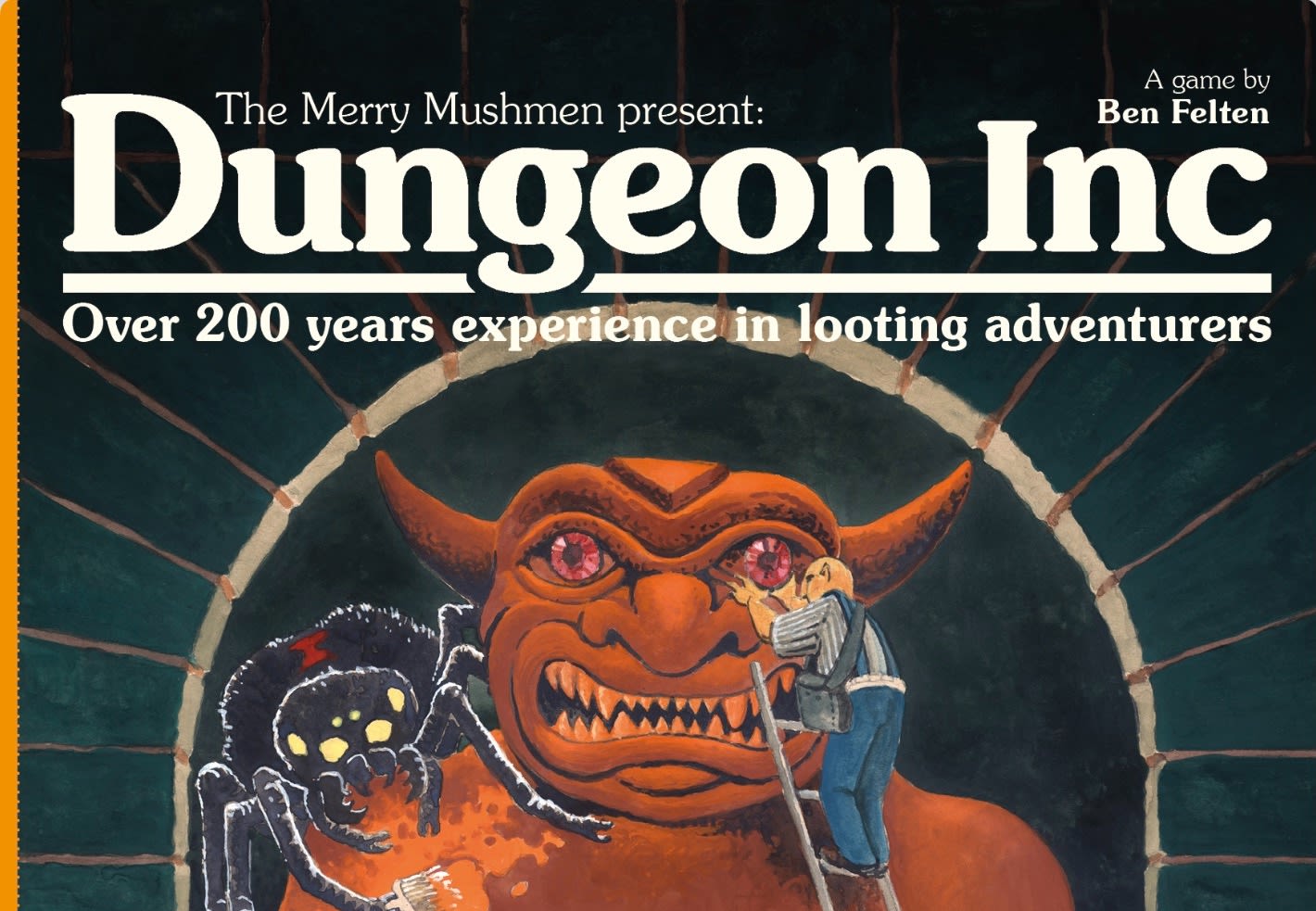
I just received my physical copies of Dungeon Inc.: the main rulebook and the mission booklet.
This is not a full review yet. I have not played it, and I still need more time with the rules, the missions, and the book as a complete table object. But I was already really interested in the premise, and now that the books are in my hands, I wanted to share why this one caught my attention so quickly.
The short version: Dungeon Inc. flips the usual dungeon fantasy perspective. You are not the adventurers entering the dungeon. You are the monsters working for the company that runs it.
And honestly, that is a very good pitch.

What Is Dungeon Inc.?
The official Merry Mushmen page describes Dungeon Inc., by Ben Felten, as a game where you are a monster working for a corporation that secretly operates the largest megadungeon in the land. Your job is to deal with the “clients,” which mostly means adventurers who are refusing to die properly.
The product page sells the premise with a line that immediately tells you what kind of game this is:
Be a monster! Delve dungeons. Slay adventurers. Collect your paycheck.
That is the thing I love about the idea. It takes all the classic dungeon logic we usually accept without thinking too much about it and turns it into a workplace comedy.
Why are there monsters waiting behind doors? Why are traps reset? Why is the dungeon always ready for the next group of adventurers?
Because the dungeon is a business.

The adventurers are the clients. The traps are infrastructure. The monsters are employees. And somewhere above you, upper management is probably making terrible decisions.
The Premise Works Because It Explains the Joke
What makes Dungeon Inc. interesting to me is that the joke is not just a joke. It also gives the game a very clear structure.
You are not simply playing “evil monsters” for the novelty of it. You are employees with a job to do. You have missions. You have paychecks. You have office life between dangerous assignments. The official description mentions downtime where characters can relax, spend their disposable income or suspiciously retained loot, pursue friendships or romance, and maybe investigate the darker secrets of upper management.
That is a very fun contrast.
On one side, you have dungeon-crawling violence: adventurers, traps, loot, monsters, and deadly missions. On the other side, you have corporate life: performance, office politics, seniority ranks, and probably a very questionable HR department.
For me, that is exactly the kind of absurd premise that can make old dungeon tropes feel fresh again.
Funny, But Still Dangerous
From the outside, Dungeon Inc. looks funny. The whole concept has a strong comedic hook, and the workplace framing is doing a lot of work.
But I do not get the impression that this is only a joke game.
The Merry Mushmen page describes fast, battlemap-free combat, life-draining magic, random tables, mission creation tools, and campaign modes. The mission structure also sounds like it expects the players to be under pressure. You are dealing with adventurers, dungeon denizens, traps, workplace problems, and the need to keep the company secret.
That matters to me. I like funny games more when the danger is still real. If everything is only a gag, the premise can get old quickly. But if the table is laughing while also worrying about whether their monster employee survives the next mission, that is much more interesting.
The Books and Presentation
The version I received includes two books:
- the Dungeon Inc. main rulebook
- the Mission Booklet
The official product page lists the main book as a 128-page hardback and the mission booklet as a 72-page softcover.
That mission booklet is one of the parts I was most curious about. With a premise like this, the adventures matter a lot. The game can have a great central joke, but the missions are what will show whether that joke creates interesting play at the table.
Visually, the book has a strong old-school direction. It feels intentional. The art and layout lean into that grimy, dungeon-fantasy energy, but with enough weird office-life humor around the edges to make it feel like its own thing.

Again, this is still an early impression. I do not want to pretend I have fully evaluated the layout, usability, or mission design yet. But as a physical object, it definitely made me want to keep flipping pages.
The Rules Basis I Want to Explore More
The rules are the part I still need to spend more time with before saying too much.
The product page mentions character creation, battlemap-free combat, life-draining magic, random tables, mission creation, and campaign support. The notes I had going into this also pointed me toward Macchiato Monsters as a possible reference point.
For anyone unfamiliar with it, Exalted Funeral describes Macchiato Monsters as “a rules-light, slightly collaborative, old school roleplaying game” designed by Eric Nieudan. That gives me a useful frame of reference, but I still want to verify exactly how Dungeon Inc. presents that relationship in the book before making stronger claims.
What I am hoping for is a ruleset that can support the comedy without becoming too loose. The premise is absurd, yes, but the table still needs clear pressure: adventurers who are dangerous, traps that matter, resources that run out, and corporate objectives that create problems instead of solving them.
If the rules can carry that tension, the whole thing could work very well.
Why This Caught My Solo RPG Attention
I do not want to claim that Dungeon Inc. is a solo game before I test it that way.
But as a solo RPG player, the mission structure immediately makes me curious.
Playing monsters who are sent into dungeon levels to solve company problems feels like it could adapt nicely to solo play. You have a job. You have a location. You have objectives. You have dangerous adventurers behaving like the usual heroes, except now they are the problem you need to manage.
That is a strong setup for procedural play.
I am especially curious about how the mission booklet handles structure. If the missions provide enough concrete situations, factions, objectives, and complications, I can imagine this being a very fun game to experiment with solo.
But that is for a future article. For now, it is just the part of the design that makes me want to test it sooner rather than later.
The Quickstart Is Worth Checking First
If you are curious but not ready to buy the books, there is a Dungeon Inc. Quickstart PDF available through the link below.
I always appreciate when a game has a quickstart, especially when the premise is this specific. It gives you a lower-friction way to decide whether you want to look deeper before buying the books.
For Dungeon Inc., I think that matters even more. The pitch is strong, but it is the kind of game where I want to see how the joke becomes procedure.
Resources
- Dungeon Inc. on Kickstarter
- Dungeon Inc. on The Merry Mushmen store
- Dungeon Inc. trailer
- Dungeon Inc. Meet The Designer Q&A
- Dungeon Inc. Quickstart PDF
- Macchiato Monsters on Exalted Funeral
Final Thoughts
Right now, Dungeon Inc. feels like one of those games where the pitch alone does a lot of work.
Be a monster. Work for the dungeon. Kill adventurers. Collect your paycheck. Try not to get crushed by the job, the clients, or whatever upper management is hiding.
That is funny, but it also sounds genuinely playable.
I still need to read more, and I want to come back with a proper follow-up after I have tested the rules and the first mission. But as a first impression, this one has my attention. The combination of reverse dungeon crawling, office politics, old-school danger, and physical book charm is exactly the kind of weird RPG idea I like discovering.
Cheers!
Subscribe to the newsletter
Never miss an article. Get the latest articles delivered straight to your inbox.
By subscribing, you agree to receive new article emails. You can unsubscribe at any time.Privacy Policy


